Coming soon!
Wednesday, November 16, 2011
Sunday, October 2, 2011
Sonic Colors Review
Sonic just might have the most interesting profile of any video game character out there. After starring in five all-time classic platformers in the Genesis era, the quality of his games started to slide: Sonic X-Treme for the Sega Saturn was a cancelled project that was a main cause to its downfall, and the Dreamcast Sonic games, while enjoyable at the time, have not aged well at all. But things really went downhill starting with Sonic Heroes in 2004: the focus was starting to separate from Sonic and towards his underdeveloped sidekicks. In 2006, Sega released an unfinished trainwreck of a game simply called Sonic the Hedgehog, at which point most people lost their faith in the hedgehog completely. Sega realized how awful the game was, and released Sonic Unleashed in 2008, which was a step in the right direction, but was hampered by some awkward design choices. But in 2010, Sega finally got it right. After releasing the good Sonic 4 for download services, Sega unveiled Sonic Colors for the Wii, the best Sonic 3D Platformer ever and the best Sonic game in 16 years.
Sonic Colors is a 50/50 mix between 2D and 3D Platforming sections, and many different modes of control. Set inside a giant interstellar amusement part, some sections are intricate single-panel platforming sections (admitedly the weakest part of this game), long stretches of land, and overglorified quick-time events (more fun than it sounds). This balance is pretty tight: no section really overstays its welcome, but nothing feels underutilized either. The same can be said about the biggest part of this game, power-ups. A first for the Sonic series, Sonic can temporarily turn into multiple forms, including a spike ball that acts like the Spider Ball from Metroid on crack, a blue cube that turns certain markers into blocks, a rocket that blasts you high into the air, and, my personal favorite, a laser that bounces rapidly off walls and kills anything that comes into contact with it. The variety of worlds in this game is also well done, with the ability to play them in almost any order you want to. From a candy-filled wonderland to a starlight estraveganza to an interstellar aquarium, it's not just the usual fire-ice worlds that have done to death in the Mario games, a strength the Sonic series has had for a long time. The game even has a 2-Player sidequest, but while enjoyable, have some scrolling-death issues in multiplayer and pale in depth to the levels.
Challenge-wise, this game has it good. While you will run into some cheap deaths, the challenge is pretty fair and can set most people off. It's also a game for people who have quick reactions, and if you don't have this attribute, this game will teach you about it. If you're really stuck, though, you can set on a navigator, where Tails tells you how to beat the tricky parts. The Acts are huge and have 5 Red Rings hidden in them, acting as the main collectables in the game. You can also try to go for S-Rankings in each levels, which is the real test for hardcore players.
There's no questioning it: this game looks gorgeous. When you go onto some of the automated sections, take some time and oogle around the environments: they are incredibly well-done and detailed, Sega skipped out at nothing. From the cutscenes to the character models, everything looks good. Speaking of cutscenes, this game's ones can be pretty cheesy, with Sonic spouting some little puns and Eggman's robots providing comic relief. They're not the greatest things in the world, but provide a nice change of pace, and the voice acting this time is tolerable (thanks to Sonic's cool new voice actor and only him, Tails, and Eggman appearing). The game's soundtrack is also incredibly good, yet another stable of the franchise. Ranging from smooth rock, trumpet blasts, soothing piano tracks, and more, it's a shame this game doesn't have a sound test feature in it. Frequently appearing in the background are Eggman's PA announcements, and you should take the time to listen to them, they're genuinely funny.
So does this game have problems? Unfortunately, it does. There are some forced platforming sections that come right after high-speed sections, majorly slowing down the action, the boss battles are pretty dissapointing (bar 1 of them), and the Frenzy Wisp is just terrible to control in a 3D plane. Thankfully, these problems can be majorly overlooked, seeing that Sonic has faced MUCH worse issues than this.
VERDICT
GAMEPLAY: While it has some rough edges, Sonic has finally found 3D gameplay he's comfortable with. 9.0
GRAPHICS: Absolutely brilliant, tons of attention to detail put in. 10
AUDIO: Enjoyable as well. 9.5
Overall: Sega did it, they actually did it: they made a 3D Sonic game that can stand toe-to-toe with the Genesis games. Though nowhere near as legendary as those games, Sonic Colors is definitely worth a buy and, along with the upcoming Sonic Generations, proof that Sonic is far from dead.
9 Rings out of 10
Wednesday, July 27, 2011
Pokepark Wii: Pikachu's Adventure Review
There's no denying that the Pokemon RPGs are amazing games. But with every popular franchise comes the inevitable spin-offs, and Pokemon has had lots of them. Some were good (Pokemon Snap, Pokemon Puzzle League), but some were abysmal (Hey You, Pikachu!, Pokemon Channel). This new spin-off title, Pokepark Wii: Pikachu's Adventure is a treat for hardcore Pokemaniacs.
Before we start, some background information. Pokepark was an actual place that was open in Japan for a part of 2005. It was pretty popular, but not many people outside of Japan got to experience it. Pokepark Wii is nothing like the actual park, mind; mostly because actual Pokemon roam around the virtual one. You are a Pikachu who has been guided by Mew to the Pokepark, which is missing the Sky Prism pieces. You gain these items by beating the area leader's minigame, 14 in total. These activities range from a 100-meter dash, a vine-swing challenge, a jet ski-style race, a boxing challenge, and more. The best of these minigames is Bastiodon's Block-Bash, a Breakout/Arkanoid-style game with lots of little twists. Rhyperior's Bumper Burn also stands out from the crowd, with its bashing madness. The racing game is repeated way too many times thorough the game, though, but with minimal changes. The two flying minigames should also have better controls, too.
In order to succeed at these activities, you can't do it with Pikachu alone. By wandering around the Pokepark you see other Pokemon strolling around. Talk to them and they ask you to partake in a friend challenge, which is either a game of chase, a battle, a fetch-quest, or a quiz. The battles are especially fun and they show you what it would be like if Pokemon was an action RPG instead of a turn-based one. Win these challenges and they become your friend, allowing you to control them during the minigames. Each Pokemon is very true to their personalities, and you're bound to find someone you like in this game. The game also includes RPG-like stats, which, when trained upon, allow you to run faster, shoot larger Thunderbolts, etc. It's just so much fun to electrocute these adorable creatures.
The presentation is pretty good, too. The graphics are nothing extra-spectacular, but they get the job done. Control can be a bit wonky, though. You hold the Wiimote on its side, but it doesn't always lead to great controls because you're walking around a 3D world; I often found myself locked into a position where the camera couldn't turn. Sound is also okay, too. The Pokemon use their anime voices instead of their screechy cries, which is a positive and a negativ: some Pokemon are cute, while some are so damn annoying it's not even funny.
VERDICT
Gameplay: It's a mixed bag. Some of the events are boring, while some are really fun. 7
Graphics: Nothing too amazing, they work out. 7
Audio: Again, nothing that amazing. Some of the Pokemon voices are questionable, though. 6.5
Overall: Right now, this game is almost always priced at $50, so I advise to wait on this one. But if you are a Pokemaniac or like cute things, this game is right up your alley.
6.75 Mudkips out of 10.
Sunday, May 22, 2011
Donkey Kong Country Returns Review
In 1994, Nintendo released a revolutionary game on the SNES: Donkey Kong Country. The gameplay itself was, admittedly, generic; but the game made true waves in its graphics department. It used the most powerful technology on the SNES to move wire frames on-screen, virtually creating "3D". Looking back, these graphics are extremely primitive, but at the time were startling. Now with consoles able to produce amazing graphics on the fly, Retro Studios (developers of the highly-popular Metroid Prime series) decided to revive the DKC series, and the result is something that far outclasses its SNES grandparents.
Donkey Kong Country Returns changes a lot of staples of the franchise from the get-go, though. The main villains are no longer the tired Kremlings, but new drum-inspired Tikis. They hypnotize all the animals on Donkey Kong Island to gather all the bananas possible, which leads Donkey Kong and Diddy Kong to go and stop this ridiculous mess once and for all. The plot is told by humorous and often-interactive GC scenes, with preposterous setups and other crazy moments.
Donkey Kong still has the same "weighty" feel to him from the SNES days, but his jumping and acrobatic prowess have drastically improved. Instead of having small, very weak hops, Donkey Kong now has the precision leaping of his plumber archnemesis. Ground-slapping and Rolling is now delegated to a quick flick of the Wii Remote, and it's comfortable and precise. A second player can join in for co-op, too, though relegated to Diddy Kong. The little ape is much more agile, and gains a bonus boost from his rocketbarrel, though doesn't have the same "power" feeling as the bigger ape.
In a Retro tradition, the environments and stages are ridiculously well-designed. From classically-inspired levels to sun-bathed oceans that make everything feel like an Ipod commercial to a beach infested with pirates to the crazy mine kart levels, no idea feels overused or underused. The bosses are also great in design, too. Excluding the first and sixth one, their patterns are actually difficult to completely figure out on the get-go, and they provide a great challenge, a rarity for platformers.
Another staple of the SNES games was their legendary difficulty; this is carried over in DCKR. Unlike the original games, though, the challenge level never feels cheap or unfair; you always feel like you can beat it. The new Rocketbarrel levels are a true testament to this: they have easy to understand controls, but have a sky-high challenge level. Each levels also features the staple KONG letters, and the new Puzzle pieces. Finding and obtaining them is a true challenge, and they unlock great bonus features, including the Retro-manditory Art Gallery, which has beautiful hand-drawn artwork.
Graphics-wise, this game lives up to the SNES testament of delivering the best 2D graphics possible. Donkey Kong himself shows a great deal of emotion, from facial ticks to fluid movement. The music is also professionally done, with stylish remakes of classic DKC songs.
So what doesn't work? Well, the new blowing function (ducking and waggling the remote) slows down the action a bit, playing Wii Remote-only doesn't work out well, Time Attack can get VERY annoying, and the game can be a bit frustrating for less-experienced gamers, though there is a Super Guide mode that works much better than in New Super Mario Bros. Wii. Overall, though, this monkey still shines.
VERDICT
Gameplay: Still as fun as ever, and vastly spruced-up from the originals. 9.5
Graphics: Staggeringly good, with an astonishing attention to detail. 10
Audio: Well-conducted tunes will have your head bobbing in no time. 9
Overall: Donkey Kong Country feels like a true fulfillment of its SNES predecessors, and is another showcase that the Wii is the new system for amazing 2-D platformers. More fun than a barrel of monkeys.
9.5 Banana Coins out of 10
Friday, March 25, 2011
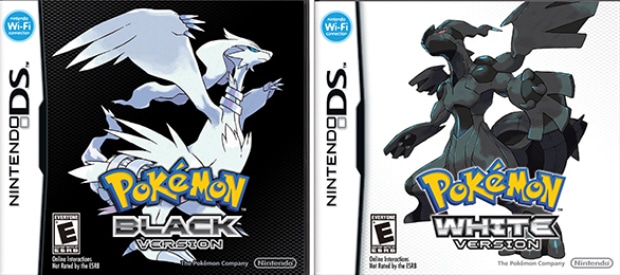
Pokemon Black and White Review
Pokemon has always been a massively popular franchise: 15 years since the Japanese Red and Green, and the series is still going strong. But as the years have gone by, the franchise has lost some of its luster, due to Game Freak's refusal to do any huge changes. But this is different: Pokemon Black and White is like GF's slap-in-the face: this is the largest change of the game in Pokemon history, and it definitelly paid off.
Now I'm not saying that the Gen 4 games were bad: quite on the contrary, I enjoyed them a lot. But once you play this game, there is simply no going back.
Pokemon Black and White starts off like any other Pokemon game: waking up in your house in the Unova Region, you get to choose from the 3 starter Pokemon (The speedy and defensive Grass-type Snivy, the powerhouse Fire-type Tepig, and the all-arounder Water-type Oshawott), and then build a team from there to beat the 8 Gyms and then the Pokemon Leauge. This may sound simple enough, but the more you dive into it, the game's true colors show: this is one of the most complicated games ever made. Hidden under its childlike designs and bright colors is an RPG with many intricacies: stats are determined on type, natures, styles, orientations, breeding, and much, much more. The learning curve is steep for the newcomer, but once you scale the cliff, you will be hooked. This game is more addictive than drugs: it starts to become a lifestyle, an endless treasuretrove of fun.
This is all old news for the Pokeveteran, so what does Pokemon Black and White offer to them? Answer: a whole lot. A change in plot is the biggest difference, with Team Plasma having a much more dedicated villan role than past evil teams. The side and main characters have much more personalites, like how Gym Leaders help you around town and with activating new areas rather than just sitting idely in the same place forever. The main story is about averave for a normal RPG: about 20 hours, but with training and catching Pokemon devouring the rest of your time.
Possibly the largest improvement in Black and White is the step-up in graphics. Instead of those slight seconds of visual trickery as seen in Generation 4, these games have huge, sprawling bridges, giant 3-D castles, cities actually the size of cities, and spectacular camera angles. The battles are the biggest leap, though. Before, battles were just cardboard cut-outs moving slightly and throwing words at each other. This time, the Pokemon move, jump, flap their wings, dance, and make poses all through battle, making encounters feel really alive. Battles also move at a 2x faster rate than before, so you never feel bored.
Much has been made about the new Pokemon in the game. There are over 156 of them, each more unique than the last. But the big reason they've got so much attention is that they are the only ones that appear in the game: for the fist time in Pokemon history, caves are not littered with Geodudes and Zubats. This also means that veterans have to rethink strategies instead of going into random battles autopilot, and newbies have a fresh start without having to learn all about the other 493. Don't worry, Dragonite and Garchomp lovers: Pokemon from the other 4 Generations appear after the main story is done, and the ability to mix the old Pokemon with the new ones is extremelly enguaging.
Pokemon Black and White also succeds on the slightly smaller changes: the music is much more enjoyable than Gen 4's, TMs are now unlimited usage (a practical godsent for people like me), leveling up is much easier due to obtaining two Exp. Shares and one Lucky Egg early on (which were practically impossible to find in previous generations), Legendaries seem easier to catch, the ability to have many Key Items selected, and the mulitiplayer options are greatly expanded, with random matchups and super-fast Infared connection.
Game Freak may've fixed many of the problems with Pokemon, but a few still persist. As with the aformentioned situation with a steep learing curve, the dialoge seems a bit more cheesy this time, and Pokemon encounter rate has seemed to have shot up a bit. These are minor problems, and only add tiny scratches to this pure gemstone.
VERDICT:
Gameplay: Improved by tenfold. The best in the whole series. 10
Graphics: Also a major step-up. A world you can really relate to. 10
Audio: Brillant. One of the only DS games that you need headphones for. 10
Overall: Game Freak truly lived up to their slogan "A New Beginning". Perfect for any fan of the series, whether they be newbie or Pokefreaks. If you could only have one DS game for the rest of your life, make it this one.
10 out of 10 Starmies
Friday, March 4, 2011
Peggle Review
Popcap, already making huge bucks and massive downloads with their famous Bejewled, decided to go off the beaten track and make a new sensation: Peggle. Peggle is part pachio, part pinball, part shooter, part psychadelic trip, and all awesome.
Peggle is a hard game to describe if you don't try it for yourself. You have 12 balls, and there are 65+ Pegs on the board. You shoot the pinballs out of the cannon placed atop the screen, and they bounce off the pegs like The Price of Right's little game Plinko. Your task: to get rid of the 30 orange pegs on the screen. You can rack up insane combos and perform long shots, 10-in-a-rows, and much more; what's better is that these combos are insanely satisfying to pull off. Plus there are character-specific power-ups that can drastically alter your final result.
Not only is Peggle unique with its gameplay, but the visual aesthetic certainly isn't holding back. Each character has outrageous design and the levels reflect their themes. When you get major combos, a rock-heavy gerbil screams out a radical message to you. Getting a lucky shot will flash the words "SUPER LONG SHOT!", along with a huge bang. And when you hit that last orange peg, Betthoven's Symphony plays, and rainbows fly everywhere. It's all kinds of crazy.
Gameplay modes are not in poverty: there are 50 Levels, 75 unique Smash Bros-style Challenge modes, a Vs. Mode, and Free Play to reflect your skills. The only thing lacking in this game is the music, with the same 4 tracks playing over and over. Though if you are playing the Ipod versions, you can change it to what's currently playing.
VERDICT
Gameplay: Starts off simple but then turns into a crazy, swirly masterpiece. A truly addictive experience. 9.75
Graphics: Whoever works at the visual and design department of Popcap needs an even bigger paycheck. 9.75
Audio: Slightly lacking, but easilly fixable, because you can use your own. 7.5
Overall: This is highly recommended to all no matter what your gaming experience is. Unfourtunatelly, the best version is the Ipod Classic version (because it was made with the clickwheel in mind), which is hard to find on the Itunes Store.
9.5 out of 10
Friday, February 4, 2011
Super Mario World 2: Yoshi's Island Review

In 1995, the gaming world's eyes were fixed on Nintendo's next new gaming wonder: the Nintendo 64. The pre-rendered silicon graphics and Blast Processing of the day were being overtaken by the rise in 3D gaming. Not ignoring the people who already had a SNES, Nintendo pushed everything the 16-bit machine could do into one single game: Super Mario World 2: Yoshi's Island. This game became an instant success and gave Yoshi a long-running franchise in gaming.
Yoshi's Island is a prequel to previous Mario games: the stork is carrying babies Mario and Luigi to their parents when the evil magikoopa Kamek abducts greenie, leaving Mario plunging towards an island. He lands on Yoshi's back by coincedence, and the two instantly bond: Yoshi is charged with protecting the little plumber from the evil all around them. This game plays very differently from the past Marios: there's no time limit, no power-ups (in the traditional sense), and instead of controlling Mario, you control Yoshi. This has been the center of debate as if this is really a Mario series game, but for my money, this goes amongst the plummber's other platformers.
Players instantly found out that Yoshi controls much differently from Mario: he can dash without holding a button, has a long tounge that can go into any direction, can produce eggs and throw them using an ingeniuos Egg-tossing system, can Ground-pound (the first game it appears in), and can flutter to gain extra height and width on his jumps. Yoshi can also encounter Transformation Bubbles, which turn him into a helicopter, mole tank, train, etc., each with a more distinct feel than the last. But if he gets hit, Baby Mario floats away in a bubble (crying obnoxiously), and a timer ticks down until 0, when he will be abducted by Kamek's croonies and a live will be lost.
The levels are the true highlight of this game. Besides one or two levels, the rest all are brilliantly designed. Nearly every one has its own unique gimmick, then that same gimmick is multiplied tenfold in the later level. There are too many of them to list, but the most notable are merry-go platforms that move by your weight, jelly blocks that conform to you and the wall, the fuzzies that make you dizzy and the world go wavy, and much more. This game's difficulty level is no child's play, either. The first two worlds give you the basics, then the challenge ramps up evenly until levels become pure madness. Yoshi's Island also has a high emphasis on collecting: with 30 mini-stars, 5 Flowers, and 20 red coins to collect every level. Trying to get 100% on every level certainly adds a huge replay value.
The game's graphical style is one of the most unique in gaming history: the art, levels, enemies, and effects seem straight from a child's coloring book: it still looks beautiful in motion today. Yoshi's Island ran on the Super FX 2 chip, so it could process these astounding graphics on the fly. The music is also worth a great look. Out of all the tunes from the SNES era, this game probably has the most catchy and memorable.
The only real problems with Yoshi's Island, besides the aformentioned 2 unfun levels, is that the difficulty spike might be too much for smaller gamers, and there could be much less of Baby Mario's obnoxious crying.
VERDICT
Gameplay: Well-polished and tight. Yoshi can definitelly do what Mario doesn't. 9.75
Graphics: Still a charm. This graphical style eventually carried over to games like Paper Mario and Kirby's Epic Yarn. 9.75
Audio: Joyous. Tunes that get you up and running in the level. 10
Overall: The huge variety quantity of insanely fun gameplay should keep you well into this game for months. If you plan on owning one SNES game, make it this one or Super Metriod.
9.75 out of 10
Thursday, January 27, 2011
Super Mario All-Stars: Limited Edition Review
In 1993, Nintendo came out with an amazing collection of Mario's greatest adventures: Super Mario All-Stars. It contained fancy remakes of Super Mario Bros., Super Mario Bros. 2, Super Mario Bros. 3, and the not-released in America at the time, The Lost Levels, which was the Japanese Mario 2. Fast-foward 18 years: the NES Super Mario Bros. is celebrating its 25th Anniversary, and Nintendo decides to celebrate it: with re-releacing Super Mario All-Stars on the Wii, but with some added anniversary content. What comes out is reasonable at the most, but it could've been much, much better.
The game part of SMAS remains untouched, even the button prompts. It has now been modified to support the Wii Remote, which is pretty convienient. Everything is still as great as before (and The Lost Levels hasn't got any easier); but in turn, these have already been on the Virtual Console for years, abiet without their 16-bit polish. They play almost the same, so you'll probably save more money anyways if you buy the originals. I would've liked full-fledged remakes of these games with New Super Mario Bros.-style graphics, or at LEAST the Super Mario All-Stars+Super Mario World redo from the SNES.
Sadly, the game is probably the only highlight of the package. The included art "book" is only the size of an Instruction Manual, and not even the notes at the bottom of the pictures are translated. Sure, it is cool to see a picture of the whole Mario production crew with some cool notes about each game in the series, but it could've been much, much better. Just look at the Mega Man: Official Complete Works artbook. 200+ pages of art, beta drawings, fan art, and other cool stuff; plus, all the notes are translated. This really didn't take that long to make, I can tell.
The CD's even worse. You would expect fully-orchestrated remixes of classic Mario tunes, but no, it's all the originals. It's not even the best selection of music for Petey's sake; they used the TRAILER music for SMG2 instead of the actual in-game song! This is laziness beyond my belief.
VERDICT
Gameplay: Still as good as before, but you'll probably see nothing new here. 8.0
Graphics: Again, the same. 7.0
Audio: The game's audio still rocks, but the included CD is a total miss. 5.0
Overall: If I could summarize the whole package into one word, it would be this: lazy. Virtually nothing here is all that amusing, and you're better off buying the originals off VC anyways; mostly because they have Pause-states so you can put it down for awhile then pick right where you left off. Mario deserves better for his big birthday.
5 out of 10
Friday, January 21, 2011
Kirby Air Ride Review
By 2003, Kirby had become a Nintendo icon. He had a host of games, a playable-character role in the Super Smash Bros. series, and now even had his own anime. So it was obvious Nintendo would bring the little guy to their next-gen console, the Nintendo Gamecube. But instead of a platforming adventure, HAL created the first-ever Kirby racing games, and it ended up being the finest entry in the series.
Kirby Air Ride takes a lot from the Smash Bros. plate: the menu screens look almost the same, and it supports 4-player competition. The controls are extremelly simple: Control Stick to steer, A to hold down a boost and take on tight corners. This makes the game acessable to all audiences, but still has a lot of content for the experienced gamer; mostly because there are over 20 Air Ride machines, all of which control in their own special ways and have different strengths and weaknesses.
There are three modes to this game: Air Ride, Top Ride, and City Trial. Air Ride comprises of 10 tracks and is a good place to test your skills. These 10 tracks get kinda boring after awhile, but you can do Time Trials of these courses. Kirby's ability-copying in integrated in this mode by swallowing up enemies on the side of the track and taking their powers, acting much like the Mario Kart Item Boxes. Top Ride plays like the top-down racers of old, and has a much bigger emphasis on Item usage. They range from a cake that makes you huge to a giant cloud that zaps anyone unfourtunate enough to pass its way. The controls feel a bit weird, though; and once again, there's only 10 tracks or so to enjoy. But it's great in short bursts.
The mode that makes the whole game is City Trial. You are set over a fairly small city with 5 minutes to upgrade your ship for the minigame that appears after the timer stops. So much happens between those 5 minutes, though. You can find other ships lying around and hop on them, you can pick up patches that increase Offense, Defense, Flight, etc., much like an RPG, you can pick up items or copy abilities and destroy the other 3 opposing Kirbys and steal all their stats, you can gather pieces of a ship and then fuse them together to make one of the Legendary Air Ride machines, and so, so, so much more. The ending minigame is always fun: from a Drag Race to a Demilition Derby to a fight with King Dedede; all take advantage of one of the stats you boosted. To sum it up, it plays like an extended version of Mario Kart's battle mode on crack. You and your friends will not stop playing this mode.
The graphical and musical quality of this game is also astounding: each area has its own distint textures, and the music is all orchestrated and is absolute ear candy (though most came from the Japanese version of the Anime). This game has a bunch of replay value, too, in the form of a checkist with many different tasks to fill out. There are over 300 of 'em, so you have a lot to do if you truly want to be the master of the Ride.
VERDICT:
Gameplay: Ultra-addicting. One of the most fun multiplayer experiences ever. 10
Graphics: Well done. Not too spectacular, but it's good to the eyes. 9
Audio: The top-tier of epic. Tunes that seriously make you feel like a winner. 10
Overall: Never before has one simple gameplay mode made a whole entire game, and then some. If you want a game that is great to get into by yourself or with friends, but absolutely impossible to put down, this is it. No other GCN game is finer.
10 out of 10
Thursday, January 20, 2011
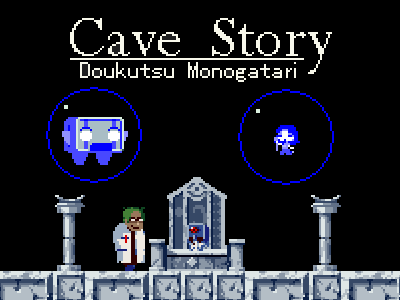
Cave Story Review
In 2004, Indie game designer Pixel created probably one of the greatest downloadable games of all time: Cave Story. It became so popular that it eventually got an upgrade on PSP, WiiWare, and DSiWare. This review shall focus on the Wii version, though.
Cave Story plays and looks like the 2-D NES games of old, mostly Metroid and Mega Man. You are a lone robotic warrior named Quote who must fight his way through a deep and grand cave, picking up a variety of weapons upon the way. These weapons range from a simple handgun to an almighty laser. Each weapon has 3 different levels of power, and experience points for them are found from defeated enemies. This makes gunplay never get old, because you always wanna see the max your weapon of mass destruction can really do.
The one thing this game has what other NES games failed to convey was an amazing story. The evil Doctor has enslaved the rabbitlike Mijima people, and it's up to you to liberate the cave. Along the way, the plot takes so many stunning turn and heart-wrenching moments that I won't spoil any of it; though do have some tissues ready if you have a soft heart. An even more interesting part about this game is its endings: each show how the game will end in a variety of ways. Getting the worst one is suprisingly easy, but in order to get the best one, it requires some insane videogame skills.
The graphics are ,in one word, stunning. Even with the orignal filter on, these are the greatest hand-drawn sprites ever made. The music is something of beauty, too, and thanks to a recent patch, the music bugs have been all fixed.
Some negative aspects of the game are more of annoyances than actual problems: the tiny character can be kinda hard on the weak at seeing, the music is still a bit on the quiet side, and getting the best endings takes multiple playthroughs.
VERDICT
Gameplay: Insanely fun. There are no control errors and the story is very gripping. 10
Graphics: Brilliant. Best pixelated visuals done on any console. 10
Audio: Fits every area and is well-made. 9.75
Verdict: This is one man's love letter to all things that make gaming fun: Great gameplay, an amazing plot, brilliant graphics, and well-done music. If you like games in general, this is not to be missed.
10 out of 10
Sunday, January 9, 2011
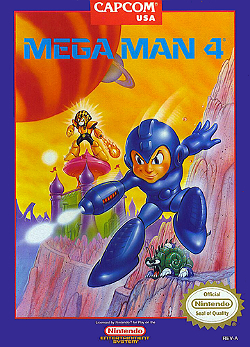
Mega Man 4 Review
In 1987, Capcom launched probably their most recognizable franchise: Mega Man. His weapon-stealing, shooting action became so popular that it produced a very large number of sequels and side franchises. Mega Man 2 is the most well-known and popular out of all of them, but one title in the franchise, Mega Man 4, remains sorely overlooked.
Mega Man 4 starts off with a little backstory on the Blue Bomber's past; how he turned from humble cleaning droid to a super-fighting robot. Pressing Start sends you to that all-to familiar Boss select screen, an important staple in the franchise. These robots this time around are well-designed and feature some of the most fun stages in MM history. Dive Man's stage is decievingly difficult, with underwater physics and death spikes all around. Pharoah Man's stage has branching pathways that lead to some tightly-spaced platforming. Toad Man's stage is water-logged and full of dizzying effects. And the story is even more interesting this time; a Russian scientist is now the evil mastermind of these new Robot Masters, though it's not long until you figure out who the real villian is.
The new gimmick of MM4 is the Charge Shot, which allows Mega Man to hold a Buster shot in, then release it to make it much more powerful. While it erases some of the challenge, it is still a very welcome addition. The weapons this time around are the series' best: every one is used numerous times throughout the game. The Rain Flush and the Pharoah Shot in particular are very usefull, but not brokenly-spammable like MM2's Metal Blade.
The graphics are vibrant and still amazing, but unlike MM3, do not cause horrible slowdown and flicker. The music is the series' best: with amazingly atmospheric tunes and beats you'll be whistling for weeks. One small complaint about this game could be that the password saves still won't let you advance to any of the castle stages, which ruins some replayability, but the game is so polished and fun anyways that you probably won't notice it as much.
VERDICT:
Gameplay: Polished to perfection. Capcom got everything right this time. 9.75
Graphics: Still well-done, and almost no slowdown. 9.5
Audio: Amazing, but great music is a Capcom standard. 9.75
Overall: It all adds up to be the greates MM in the whole series, even better than Number 2. If you're planning on picking up one Mega Man game, make it this one.
9.75 out of 10
Thursday, December 30, 2010
Mario & Luigi: Superstar Saga Review
The big End of the Year Review!

In 1996, Nintendo and Square Enix came out with the first Mario RPG on the SNES. Later in 2001, Paper Mario came out. While we waited for the next Paper Mario on GCN, which would not arrive until 2004, Nintendo treated us to a portable Mario Adventure. What we didn't know is that it would be one of the greatest games of all time.
Mario & Luigi: Superstar Saga starts off with a very humorous catch: an evil witch Cackletta has stolen Peach's voice for her own nefarious reasons, so Mario and Luigi journey to the Beanbean Kingdom. The RPG action works like Paper Mario and even Super Mario RPG, but you control Mario with A and Luigi with B. The game focuses heavilly on timed button presses: jump at the right moment when an enemy throws something at you and you can avoid damage completely, or if you press the Jump button right before attacking, you can deal more damage on the enemy. There are also fancy Bros Attacks that are multi-button combos. There are only 8 Bro Attacks, but they're so fun to do that you most likely won't notice.
Nearly every element of SS is perfect. The plot is gut-bustingly hilarious with many quotable lines, the pacing is perfect for any style of gamer, the areas are well-designed, and the enemies are some of the most creative in the genre, from a Christmas Tree Hermit Crab to a gladiator made of soda. Every character is well thought-out and has very convincing personalities. SS is also a homage to the Mario series in general, with many cameos and gameplay parts sure to set the nostalgia glands on haywire.
The Graphics are goregeous, with every thing in the game full of emotion, plus it adds to the humor. The music is also up with other GBA greats; Alphadream really nailed the musical feel of Super Mario RPG and then some.
Pulling any critisizm on this game would be nagging, but you could say the game is a bit on the short side. SS is very replayable, however, with multiple ways to approach it.
VERDICT
Gameplay: An RPG that manages to emulate many other gameplay styles, while still being true to the source material. Brilliant stuff. 10
Graphics: Well-animated and very humorous to look at. 10
Audio: Excellent. A great listen. 10
Overall: Never before have I played a game that excels at nearly everything it does. Mario & Luigi: Superstar Saga is so good, that I would go to such lengths as saying it is the culmination of RPGing in general. If you do not own this game, you are truly missing out on something special.
10 out of 10
In 1996, Nintendo and Square Enix came out with the first Mario RPG on the SNES. Later in 2001, Paper Mario came out. While we waited for the next Paper Mario on GCN, which would not arrive until 2004, Nintendo treated us to a portable Mario Adventure. What we didn't know is that it would be one of the greatest games of all time.
Mario & Luigi: Superstar Saga starts off with a very humorous catch: an evil witch Cackletta has stolen Peach's voice for her own nefarious reasons, so Mario and Luigi journey to the Beanbean Kingdom. The RPG action works like Paper Mario and even Super Mario RPG, but you control Mario with A and Luigi with B. The game focuses heavilly on timed button presses: jump at the right moment when an enemy throws something at you and you can avoid damage completely, or if you press the Jump button right before attacking, you can deal more damage on the enemy. There are also fancy Bros Attacks that are multi-button combos. There are only 8 Bro Attacks, but they're so fun to do that you most likely won't notice.
Nearly every element of SS is perfect. The plot is gut-bustingly hilarious with many quotable lines, the pacing is perfect for any style of gamer, the areas are well-designed, and the enemies are some of the most creative in the genre, from a Christmas Tree Hermit Crab to a gladiator made of soda. Every character is well thought-out and has very convincing personalities. SS is also a homage to the Mario series in general, with many cameos and gameplay parts sure to set the nostalgia glands on haywire.
The Graphics are goregeous, with every thing in the game full of emotion, plus it adds to the humor. The music is also up with other GBA greats; Alphadream really nailed the musical feel of Super Mario RPG and then some.
Pulling any critisizm on this game would be nagging, but you could say the game is a bit on the short side. SS is very replayable, however, with multiple ways to approach it.
VERDICT
Gameplay: An RPG that manages to emulate many other gameplay styles, while still being true to the source material. Brilliant stuff. 10
Graphics: Well-animated and very humorous to look at. 10
Audio: Excellent. A great listen. 10
Overall: Never before have I played a game that excels at nearly everything it does. Mario & Luigi: Superstar Saga is so good, that I would go to such lengths as saying it is the culmination of RPGing in general. If you do not own this game, you are truly missing out on something special.
10 out of 10
Monday, December 20, 2010
Favorite Games for each System
Just thought I'd like to post the list of my favorite games per system. Here they are:
NES: Mega Man 4

SNES: Super Metroid

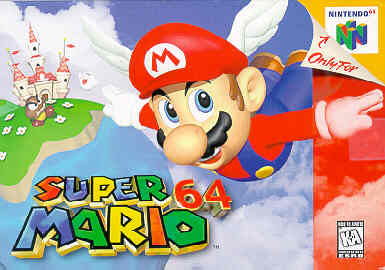
N64: Super Mario 64

GCN: Kirby Air Ride

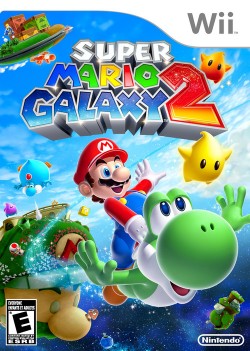
Wii: Super Mario Galaxy 2

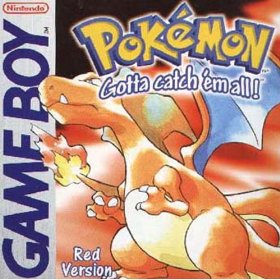
GB/C: Pokemon Red

GBA: Mario & Luigi: Superstar Saga

DS: Pokemon SoulSilver (Even though Warioware DIY comes pretty close to 1st)
NES: Mega Man 4
SNES: Super Metroid
N64: Super Mario 64
GCN: Kirby Air Ride
Wii: Super Mario Galaxy 2
GB/C: Pokemon Red
GBA: Mario & Luigi: Superstar Saga
DS: Pokemon SoulSilver (Even though Warioware DIY comes pretty close to 1st)
Friday, December 10, 2010
Kirby's Epic Yarn Review
Nintendo loves to keep us waiting. The last console Kirby game was 2003's rather excellent Kirby Air Ride, but since then the little guy's been demoted to the handhelds. But Nintendo, partnered with Good-Feel, set to change that on the Wii; and Kirby's Epic Yarn is unlike any other game in the series.
The story of Kirby's Epic Yarn (KEY for short) starts when Kirby eats a magical Metamato. Apparently, an evil sorcerer named Yin-Yarn didn't like that, and sucks him into Patch-Land, a world made completely out of textiles. (These cutscenes are told by a PBS Kids-esque narrator that is charming at first, but gets kinda obnoxious; thankfully, you can skip the scenes.) Kirby's form changes into Yarn, and soon finds the air goes right through him in this world. Kirby still has a few tricks up his sleeve, though; he can stretch out a whip-like strand of yarn that has multiple uses, like rolling up enemies into yarnball projectiles, swinging across pits Indiana Jones-style, pulling zippers to open up parts of levels, and much more.
The next biggest change is Kirby's morphing powers. At any time, he can turn into a car by double-tapping a direction, he can turn into a parachute by holding 2, and turn into a weight by holding down in air. These instant-morphs are basically the Wheel, Parasol, and Stone abilities of old, abiet at any time. But at certain times in the levels, Kirby can touch a morphing orb and turn into a large variety of objects. One levels morphs Kirby into a tank, and the missiles are guided by moving the Wii Remote. Another level transforms Kirby into a Mole Tank, allowing him to drill deep in the surface. The best transformation, in my opinon, is the Firetruck, where Kirby can aim the hose via tilting the Remote. There's enough morphs to keep your attention for a long time, and often brings me fond memories of the vehicle transformations in Yoshi's Island- a game KAR shares a lot of influence to. Note that this game can be played with two people, which is a blast.
KAR features a lot of replayability: every level has multiple achievements and lots of alternate paths. One aspect about this game that is unlike any other Kirby game, though, is the inability to die; Kirby just looses beads if he's hit, and gets saved if he falls down holes. Getting to the end of the level without loosing any beads is pretty hard in its own right, though, and the later levels have especially tricky locations of treasure chests.
The graphical style of KAR is absolutely amazing. Everything in Patch Land is made out of things you could find at a crafts store. One level substitutes quicksand for yellow waving cloth, the next has a variety of sweets yarnified, and another has beautiful snow made out of cotton. Everything looks beautiful in this game. The music especially is wonderful. From orchestated remixes on classic Kirby tunes to beautiful piano solos, the music fits the mood of each world perfectly.
The stiching in the final framework has a couple of flaws, though. Along with the aformentioned inability to die, the game is far too short. Another big issue I have is that it really does not feel like a Kirby game: there's no inhalation, copying, or any other recognizable Kirby elements. But what the game is, it suceeds.
VERDICT
Gameplay: UnKirby but still very fun. A bit on the easy side, though. 9.0
Graphics: Unlike anything else out there. So much innovation in only 2 dimensions. 9.5
Audio: Enjoyable. 9.25
Overall: Kirby's Epic Yarn, while not all that epic, is a fine addition to the series, and a game all fans of platformers should pick up.
8.5 out of 10
Tuesday, November 23, 2010
Pokemon Red/Blue Review
In 1996, Nintendo launched an RPG on the Japanese GB: Pokemon Red and Green. These two games had a revolutionary idea: instead of having pre-set heroes like most RPGs, you had to catch animals and use them to fight. It was, at first, looking to be unsuccessful, until something clicked with the public, and they started selling like hotcakes. Nintendo took a risk and launched these games in America, and needless to say, our country has not been the same since.
Pokemon Red and Blue starts out like most RPGs of the day, but a notable difference is that it takes place in modern times. As the Pokemon Trainer Red (or whatever you named him), you walk around town, then you spot a patch of grass. The Pokemon Professor, Oak, will come over and tell you you need a Pokemon. You get to choose from 3 of the Pokemon he has. One is the cute Bulbasaur, the fiery Charmander, or the watery Squirtle. If you choose one, your rival (which you can also name) will choose another one that has a type advantage to yours (for example, Squirtle's a water-type, so his moves are more effective against the fire-type, Charmander). Type advantage is only one of the aspects of the Pokemon battle. To explain every single rule would take far too long, and it's best to figure out yourself every single rule.
Random encounters are very frequent in this game, but in a unique twist, you can "catch" a foe Pokemon and put them on your team. Only 6 can be in your party, so every team is different. The big catch about the game, really, is in the phrase on the box, "Gotta catch 'em all!" Some Pokemon are very frequent throught the whole game and are very easy to catch (with an item called a Poke Ball), like Rattata, Tentacool, and Zubat; while some are extremelly rare and very hard to catch, like Chansey or the legendary Mewtwo. The variety of the 151 creatures you can find and catch in this game is amazing, and has not been surpassed by any other sequel.
The plot itself is not the most amazing for an RPG, but it does the job well. You are tasked with beating all 8 Gym Leaders and getting their badges, then with those badges must ascend Indigo Plateau and challenge the Elite 4 to become the Pokemon Champion. Along the way you'll encounter Team Rocket (the "mob" of this game) and beat their leader, run various sidequests, and battle other Trainers (with their teams of Pokemon). The lack of various features from newer games like Abilities, a lack of a map, and Breeding means that this is one hard game. But once you develop a proper team, the challenge doesn't seem quite that daunting.
The music of this game pushed the GB to its utter limit: it still rocks today. Easilly some of the best on the whole system. The graphics, though, is something that might set those who started with the newer games off: they look downright ugly by today's standards. Another thing that might set people off is how slow Pokemon learn moves and how slow they level up. Get past those issues, and you'll enjoy a great game without all the confusions of the way-complex battle systems of today.
VERDICT
Gameplay: Not as complex as the newer ones, but still as addictive as it was back in 1998. 9.5
Audio: Fantastic. A joy to listen to. 9.75
Overall: If you're newer to the franchise, or wanna see where it all began, this is the perfect game to start out with. When you've caught all of the original 151, you really feel like the champion of the world. Easilly the greatest Game Boy game.
9.5 out of 10
Monday, September 20, 2010
Super Metroid Review
In 1986, Gunpei Yokoi created one of the most popular gaming franchises in history: Metroid. The game was a unique blend of Mario's platforming and Zelda's exploration that worked well, but it had a few big gameplay problems. The 1991 sequel, Metroid 2: Return of Samus, improved some of these (Especially with the Save System), but fans didn't imbrace it that well because of its linearity. 3 years later, Nintendo launched their biggest game at the time: Super Metroid. It not only improved on nearly every kink from the previous two, but is one of the greatest games ever to be made.
Warning: Spoilers ahead.
Super Metroid starts out right where Metroid 2 left off. Samus had mothered a Baby Metroid off of SR388, and brought it to the research center. Days later, Samus recieves a distress signal, and finds all the scientists are dead by the hands of her archnemisis, Ridley. He takes the Baby with him and you're left with a minute to escape the exploding facility. It's an epic beginning to a game that justs get better.
For starters, the controls rock. It was probably one of the only games of its time that allowed customizable controls. Samus herself moved swiftly and finesely, and shooting with her beams are no trouble at all, a godsend after the first game's twiddly traction. During the course of here adventure in Brinstar, she gets various weapons like the Ice Beam, Super Missiles, and Grappling Shot, all are insanely fun to use. The enemies in-game are hard enough not to be infuriating, and all have great design. The bosses in particular are insanely fun to fight.
The Overworld is massive, with a ridiculous number of collectibles to find, so thank the Metroid gods they included a map. It's a lifesaver in confusing locations, and with it, you can never go back to the older ones again. The pacing at which you get items is absolutely perfect, and the puzzles are extremelly innovative.
Brinstar and its locales are absolutely beautiful: the graphics took full advantage of the SNES's power. The music is also very enjoyable to listen to, because it sets the perfect mood for the dreary world.
Not every gem is without its chinks. Wall-jumping can be infuriatingly hard, there are places you can get genuinely stuck, and you can't go back to the overworld once you beat the Final Boss. Still, those are very minor problems.
VERDICT:
Gameplay: Insanely fun. Keeps you appealed until you beat it, and then some. 10
Graphics: Excellent. Takes full advantage of the system's power. 9.75
Audio: Tunes that set the mood for each area perfectly. 9.75
Overall: You have no excuse not to own this game. Not only is Super Metroid the best game from the 16-bit era, but explains why videogames are so fun to play: it's a giant world begging to be loved and explored.
10 out of 10
Saturday, September 4, 2010
Mario Kart Wii Review
In 1992, Nintendo launched a Mario Spin-off game that would become so popular, it created a whole new genre: Super Mario Kart. It was insane hybrid of go-karts and the Mario universe, only made better by the insanely competitive 2-player mode. Mario Kart 64 added two more to the fun in 1997, Mario Kart: Double Dash on Gamecube added a co-op element by putting another character behind your Kart, and Mario Kart DS allowed you to race anyone around the planet for the first time. Naturally, Nintendo's next step was to bring it to their newest console, the Wii. Mario Kart Wii had a lot to live up to, but what we got in the end is not only the best racer on the system, but the greatest game in the whole series.
The game introduced a bunch of new elements to the series; the biggest is shown right on the box. Mario Kart Wii comes with the Wii Wheel, a plastic case that slip around the remote, and is supposed to simulate you at the hands of the Kart wheel. At first, it takes awhile for series veterans to get used to the more lifelike control, but commit to it, and it becomes second-nature. Not only is the Wii Wheel a unique way to play, but it's a great way for casual gamers to get quickly into the series. (You can also choose between multiple other controls schemes like the GCN Controller and the Remote+Nunchuck a la Smash Bros, but I prefer the Classic Controller myself)
Two other big new editions are Bikes and Tricks. There's as many Karts as Bikes in this game, and they each play very differently. A Kart is better at turns and can charge its Mini-Turbo to a shiny orange, when released, gives you a nice long boost. Bikes, on the other hand, can only charge to the second stage of a Mini-Turbo (Blue), but can pop a wheelie any time by shaking the remote, making it better on straitaways. The differences may not be big at first, but they can mean the matter of wining or loosing. The new Tricks feature is a welcome addition: if you shake the wheel just as you exit a ramp or jump, your character does a cool little pose, and when they hit the ground, they gain a mini-turbo boost. The tricks are more powerful the higher the jump, but at the same time become harder to land.
There are 24 characters (including Miis) to choose from, each of which resides in a different weight category (Light, Medium, or Heavy), allowing you to use different types of Karts depending on who you chose. Unlike Mario Kart DS, everyone now shares the same types of vehicles, and the machine variety is well-balanced, making there no real "best car". The Track selection is at its best; 16 Tracks new to the game, 16 from all the older games. Since there are now 12 Karts on track at a time (4 more than usual), the tracks are wider, have opportunities for tricks, and are very fun to race on. Despite a flurry of big Karts on screen, the Retro tracks are still extremely fun to play.
All the traditional multiplayer modes remain like Vs. and Battle, along with a massively improved online play. Connecting with 12
other humans is fast and easy; and knowing you've thrown a Blue Shell at an actual person is extremely satisfying. The game even includes a free download of the Mario Kart Channel: a constantly-growing community where you can take part in MKDS-style weekly missions, race random Time Trial ghosts, and see how you stack up against the rest of the world on each track.
Mario Kart Wii isn't flawless though; with 4 more added on the track means more items everywhere, and it seems that the person in 1st is constantly being pelted with Lightning, Blue Shells, POW Blocks, and more. The cars seem to have much worse acceleration this time around; even lightweights can take awhile to start back up their motors to top speed. The Battle Mode is fun for a bit, but the option to turn off teams would be nice. There is a small bit of frame-skipping in Multiplayer, but it doesn't take much away from the actual game. Lastly, the new Lightning Cloud item is just an unwanted addition.
VERDICT
Gameplay: Polished to (Almost) Perfection. The developers finally got the Mario Kart formula down and completely nailed. 9.75
Graphics: Not the best on the Wii, but still has a variety of cool lighting effects. 8.0
Audio: Mario Kart music has always been enjoyable, and this is no exception. 9.0
Overall: With over 15 million units sold, it's no wonder this game is great; the new features like Bikes and great Online makes this game a joy either to play with yourself or with your buddies.
9.5 out of 10
Thursday, August 19, 2010
Megaman Battle Network 6 Review

In 2001, Capcom launched yet anohter new era in the Megaman legacy, this time turning the Blue Bomber into an RPG star. Players found out it was more than that, though; it was more like the crazy child of Final Fantasy and Yu-gi-oh. Players could select 30 different Battle Chips out of 200 total, each wildly different and could be used strategically. Unlike most RPGs, though, you had a 3 by 3 grid you could move around in, and so did your enemy. It all seems confusing at first, but with a bit of practice, the battles became second-nature. In a 6-year period, Capcom releaced, you guessed it, 6 different versions of the game. From 3 onwards, each game was split in 2 different versions (a la Pokemon). This Battle Network was the last one in the series, and Capcom went all-out making it the most enjoyable installment in the series.
The story is much more enguaging than the previous iterations. Lan Hikari and his netnavi Megaman Exe move to the wonderful city of Central Town, so every location is brand-new and look great, plus a bunch of new folks join the party. Things seem normal then onwards, but suddenly a Cyberbeast takes control of Megaman (Different for which game you have). After a bit, you gain control of the monster within you, and you get to "Beast Out" for 3 turns each battle, and your stats rise considerably. The Beasting Out feels underutilized story-wise, but in battle, can be used in a variety of awesome strategies.
The biggest feature BN6 adds is the Cross System, a massively improved version of the Soul Unison from 4 and 5. At any time you can fuse with one of 5 Navis (once again, different for each version of the game), and gain different strategies that seem small at first, but can mean the difference from victory to defeat.
This game also takes out some of the flaws that made other instalments in the franchise annoying. Besides the aftormentioned improved Cross System, the insanely hard Liberation missions from 5 are taken out, and replaced with small story moments that highly resemble them, but are MUCH more fun. The Navi Customizer also feels more fluid, the Graphics spiced up, the Audio restored to its glory days from the 2nd and 3rd game, all the Chips are excellent, the pacing is drastically improved, and the VS mode is at its finest.
Some of the Fatal Flaws have remained from the other games, though. Random Virus Battles, though not as frequent, still happen far too often, and some of the Requests on the Request Board are monotinously annoying. A minimalist run is considerably easier than the other games, but it makes up for this due to the insanely hard Post-Game.
VERDICT
Gameplay: Capcom polished it to near perfection. Some flaws keep it from reaching that goal, though. 9.25
Graphics: The Sprites have been polished up enough, but it stil isn't the greatest-looking GBA game, despite a variety of cool effects. 8.25
Audio: Stellar. It sounds as good as the 8-bit installment's legendary scores.
Overall: If you're new to the series or are an Battle Network expert, this is the one to get. With an insane ammount of content and fun, me and my friend haven't put this one down for weeks.
9.25 out of 10
Thursday, August 12, 2010
WarioWare: Touched! Review
Let's face it: the first couple of launch games for the DS weren't that good. The biggest one, Super Mario 64 DS, while fun, was just a demonstration of the graphical power of the DS. No game for a few months was a real must-have for the system... until WarioWare: Touched came around.
This game had a lot to live up for: not only was the first WarioWare for GBA a killer app for the system, it was one of the most innovative games of the decade. So, hence the title, the game uses the DS' Touch Screen and its other features. For those who are new to the series, WarioWare is the ultimante ADD game. It throws at you a random game that lasts 4-8 seconds. In that time period, you have to do a certain task, for example: there's a guy and a girl apart from each other. A small message says "Hook up!", so you have to draw a line to connect them, and the game is beat. When you re-encounter the same game later on, it gets harder by placing objects between the guy and the girl, and the timing in which you have to do it speeds up drastically. You only have 4 lives, and when you loose a game, you loose a life. Every 10 microgames or so, a Boss Stage appears, which lasts much longer than the other microgames. They are usually more complicated and harder, but if you beat them, you get an extra life. This is the perfect pick-up and play game, where you can play for 3 minutes or 3 hours at a time.
Each of Touched's 180 Microgames is split up into different sections, hosted by different people. One batch may require you to make circles on the Touch Screen for each of the games, the other may having you do slicing motions with the Stylus. The most enjoyable ones, though, are 9-Volt's games, which are all based off Retro Nintendo games. Some microgames are insanely strange, bizzare, and hilarious, which adds to the fun-filled time you'll have with the game.
Beating certain objectives in the game unlocks you different applications, which are almost similar to most of the freeware stuff on Apple's own App Store. Like that, they probably won't hold your interest for over 2 minutes, but some games (like the Pyroro Challenge) take good advantage of the Touch Screen and are insanely addictive.
The Graphics are excellent, and are a massive improvement over the GBA games. The music is infectiously catchy, and the game even features full-length tracks that are sung beautifully (like Ashley's Theme). The voice acting is spot-on, too, without being too obnoxious.
Like the other WarioWares, though, this game suffers from the problem of being far too short. The Story Mode won't take a seasoned gamer over a day to complete, but the game makes up for it with its replay value: playing each section over again until you've unlocked all the games for it. Also, the unskippable Story Mode cutscenes last far too long and can drag on.
VERDICT
Gameplay: There are barely any games that are a dud, and are very fun to play and replay. 9.5
Graphics: Uses both the handheld's 2D and 3D to a beautiful effect. 9.0
Audio: Beats you'll be bopping your head to in seconds. 9.0
Overall: Besides DIY, this is easilly the best entry in the series. If you want a break from all other games, this should be a must-buy on your list.
9.25 out of 10
Wednesday, July 7, 2010
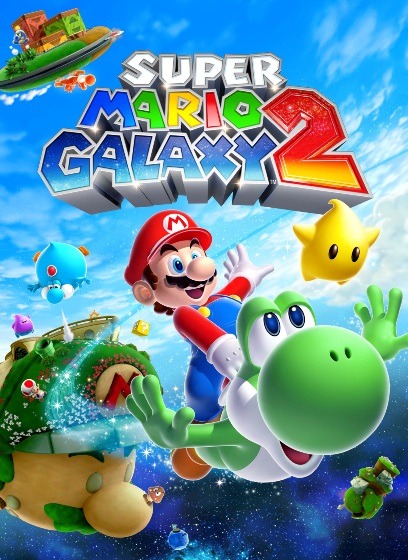
Super Mario Galaxy 2 Review
In 2007, Nintendo launched Super Mario Galaxy for the Wii, and it wowed critics, with its innovative Gravity gimmick and supersmart cameara. While I enjoyed Galaxy, it didn't have the certain spark I expect from Mario games (such as an actual challenge, Galaxy 1 was far too easy), and I preferred Super Mario Sunshine over it. With that, I went into Galaxy 2 with caution, expecting no more than, well, more of the same. While that it is, everything is improved to perfection.
The story starts out regularly: Peach gets kidnapped by a Giant-sized Bowser, and Mario must save her. The plot was one of the things I didn't like in Galaxy 1, in any other game it would feel fine, but in a game filled with talking Mushroom heads and turtles that squawk like birds, it felt too out-of-place. Galaxy 2 simplifies it down, and that's way things should be. You eventually meet up with a fat Luma called Lubba, and sees you are the hero of the cosmos, so he fashions a ship shaped like Mario's head, which he dubs "The Faceship." With the Faceship comes a new way of getting to levels: it is set up more like the 2D Mario Overworlds, so getting to levels are fast and easy. The ship itself is smaller than the Comet Observatory from Galaxy 1, which is good, because the Observatory was far too large and hard to get around.
But you didn't buy this game to see how to get to a level, you bought it because of the levels, and on that front, this game delivers. The levels are even more linear than the first games', which I thought would be a negative, but what is in them is more fun and challenging than ever before. The Level Design is excellent, an expected from Nintendo. The camera is still scary-smart, and the controls feel a bit more comfortable than the first game's, due to the better level design.
Perhaps the biggest new feature is Yoshi, who controls great. His tounge and eating powers are used in a handful of innovative ways, such as sticking his little licker onto a peg and swinging across it Indiana Jones-style, or eating a variety of fruits to float, go super fast, etc. Another positive about him is that he appears fairly often: that was one big problem for me in New Super Mario Bros. Wii: he was only used in less than 8 levels. Here, he's used in over 16 of them, and levels with him are always a fun time.
The other big new feature is the power-ups: The Rock Mushroom, Spin Drill, and the Cloud Flower. The Rock Mushroom allows Mario to roll around like a bowling ball, and is fairly fun to use. The Spin Drill and Cloud Flower, however, are a work of genius. The drill allows Mario to, well, drill into the planet's surface, setting up a variety of innovative puzzles. The Cloud Flower lets Mario create fluffy platforms whenever he spins. It's the most used item in the game, and deservedly so: it's easilly one of his greatest power-ups ever. Returning items like the Bee, Boo, and Spring Mushroom are not used very often, and that's good: I've had enough of Mario's infernal springing.
You can't really complain about a lack of challenge: this game assumes you already got down the basics of gravity and all the other gimmicks in the first Galaxy, and elevates them tenfold. Getting the 70 stars on the initial run is fairly tough, but getting all 120 is one of the hardest Mario experiences ever. And, (spoiler), even after you're done getting the 120 stars, you've still got more to do. This is truly not for the faint of heart.
The music is nothing to complain about, either. From the Jazzy tunes of the Spin Dig Galaxy to the sweeping orchestral opening in the Sky Station Galaxy, this game's soundtrack is absolutely phenomenal. And just like in Galaxy 1, old Mario tunes get a whole new limelight. The Graphics also look beautiful, too. There's never a hint of slowdown, and you always know what everything is.
This game has a few minor problems. Most of the Comet Challenges are fun (now activated by collecting Comet Metals in each level), but some are more frustrating than fun. Also, you can't skip the dialogue, so having to hear Lubba tell you every ten minutes to take a break can get pretty annoying. These are minor issues, as the game in whole is well-polished and very fun.
VERDICT
Gameplay: Greatly improved over the original. The levels are all interesting, and the new power-ups are very fun to use. 9.75
Graphics: Looks on-par with a PS3 game, maybe even better. 10
Audio: Fantastic. Your ears will thank you. 10
Overall: This is an extremelly fun game that is yet another worthy installment in the treasured Mario franchise. If you own a Wii, you must buy this game.
10 out of 10
Subscribe to:
Posts (Atom)